20 Excellent Ideas On International Health and Safety Consultants Audits
Wiki Article
Global Safety Simplified: Integrating Expert Consultants And Smart Software
In a world in which businesses operate in dozens of countries, Each with its own set of local regulations and laws, the traditional approach to health and safety management has reached its breaking point. In the past, spreadsheets, chain email, and unorganized reporting systems leave the leadership team unable to see where their organisation is compliant as well as the risk it faces [citation:1]. The integration of global health and safety experts with sophisticated software platforms represents a paradigm shift in the ways multinational organisations protect their workers and comply with their legal obligations. This isn't simply about digitizing current processes. It is seeking to establish a common source of truth that connects headquarters with local teams and transforms regulatory complexities into relevant data, and ensures that human judgment is used to inform every decision. Here are the ten most critical things to understand about this new approach to general safety oversight.
1. The Patchwork Quilt Problem Demands a Universal Solution
There's no one global Health and Safety law. Companies operating across multiple jurisdictions have to deal with a complicated patchwork of regulations local to the area, requirements for documentation and enforcement policies which differ drastically from country to country. [citation:1]. An organization with offices across ten countries faces ten different set of legal obligations, but traditional management techniques give no one place to see whether those requirements are being fulfilled. Modern integrated platforms solve this by providing management teams with an all-in-one dashboard that provides the status of compliance across all sites and across every country in real time [citation:11). This visibility improves the effectiveness of international security management from a fragmented, reactive activity into a strategically united function.
2. Software Allows Visibility, However Consultants Control
The most successful integrations realize that technology alone cannot solve international compliance challenges. One industry expert put to it "Software does not solve the problem of global compliance issues. You require people on the location who are familiar with local law understand the language and act upon what the data tells you" [citation: 1]. The platform can provide you with an overview of gaps and the consultants give you control over the resolution of those. This partnership arrangement ensures that data will trigger action, not simply awareness. Additionally, local nuances are addressed by professionals who know both the global framework of the client as well as the specifics of local legislation [citation: 12.
3. Real-Time Compliance Tracking Across Borders
Modern integrated platforms give the ability to monitor in real-time health and safety performance across every region within which a business is operating [citation: 1(1). This goes beyond simple record keeping to active gap analysis. The software continuously detects when the business is not complying with local regulations, which allows for proactive interventions before regulators or other incidents create a need for action. In the case of global companies the shift is away from recurring, backward-looking audits to ongoing, forward-looking compliance management [citation:44.
4. The Rise of Truly Integrated Software-Consultant Partnerships
The market is experiencing an explosion in strategic partnerships between consulting firms and technology providers in a move away from basic licensing of software to more integrated model of service. For example professional consultancies are partnering with platform providers to offer digitally facilitated services where skilled consultants work inside the same platform their clients are using [citation: 8]. Also, globally-based recruitment and consulting firms are working with AI-powered safety software providers to provide clients with data-driven improvement ideas and real-time mitigation feedback [citation:6Six. These partnerships recognize that the future lies with organizations with the capacity to combine sector knowledge and innovative technology.
5. Automating Audit and Assessment using Expert Oversight
Integrated platforms transform how global audits, assessments and reviews are carried out. They can automate scheduling tasks, task assignment, reminders, and escalation process and ensure that audits occur when they should and findings are tracked down to resolution [citation:5]. Mobile capabilities enable auditors on the field perform inspections online and offline, taking notes of findings right away and initiating corrective actions in real time [citation:5five. But the human element remains vital. Experts interpret findings, do root cause analysis and make sure that corrective actions are addressing problems that are rooted in culture and operations and not only surface-level violations.
6. Centralised Documentation and Access Decentralised
One of the greatest challenges for global organisations is managing the sheer volume of health and safety documentation--policies, risk assessments, training records, inspection reports, and more--across multiple countries and languages. Integration platforms can provide central cloud storage that is accessible to both local and central teams, with the ability to maintain version control and audit trails [citation: 1The following are the versions of. This guarantees that everyone works with the same data without compromising local requirements regarding documentation and ensuring that regulators as well as auditors can access the complete data instantly rather than waiting for manual compilation.
7. Strategic Alignment to Evolving International Standards
The international standards landscape is undergoing significant transformation, with ISO 9001 (quality), ISO 14001 (environmental), and ISO 45001 (occupational health and safety) all entering revision cycles through 2026 and 2027 [citation:7][citation:10]. These revisions are focused on digital transformation in the workplace, resilience for organisations, mental risk management, health and an integration into ESG frameworks [citation: 1010. The integrated solutions of consultants and software are uniquely equipped to aid organizations in these changes, thanks to systems designed to meet the changing requirements and with consultants who know both current requirements and rising expectations [citation : 9].
8. Cultural and Language Competences In
Successful global management of safety is more than translation--it requires professional competence in a variety of cultures. Integrative services that are leading ensure that the local staff members are not just certified to international standards but also fluent in both English as well as the local language and certified to be proficient in local legislation and the global frameworks of clients [citation 1]. This dual fluency ensures that the communication between the local and headquarters teams is smooth, local cultural factors affecting safety are understood and that safety policies resonate with local workforces rather than being viewed as a foreign intrusion.
9. From Compliance Burden to Strategic Advantage
Companies that can successfully combine consultant expertise and smart software will find how safety management can shift from being a compliance issue to a strategic advantage. Real-time dashboards provide insights that inform business decisions--identifying high-risk areas before expansion, benchmarking performance across regions, and demonstrating robust governance to investors and insurers [citation:1][citation:9]. The information generated by integrated systems aids in continuous improvement making it possible for organizations to go beyond incident response that is reactive to a more predictive approach to risk management.
10. Scalability without Complexity Sacrifice
Perhaps the most striking benefit associated with integrated solutions for software and consultants is their capacity to scale. No matter if an organization operates in five countries or fifty, using the same software and consultant network can grow to meet their needs without multiplying administrative complexity [citation:4]. New sites can be brought on board using pre-configured compliance frameworks adapted specifically to local requirements. They can be connected directly to the global dashboard and aided by local consultants who comprehend both the context of the region and the international standards of the organization [citation:11. This means that, as businesses grow, their security ability to manage it grows too. It's not as a last resort, but as an integral function starting from the beginning. Check out the most popular health and safety audits for blog examples including ehs consultants, safety report, identify hazards, occupational health services, consultation services, safety meeting topics, job safety assessment, health and safety and environment, work safety, workplace health and most popular health and safety services for more advice including smart safety, safety day, safety meeting, safety companies, safety consultant, occupational health and safety, safety hazard, safety video, health and safety and environment, health and risk assessment and more.
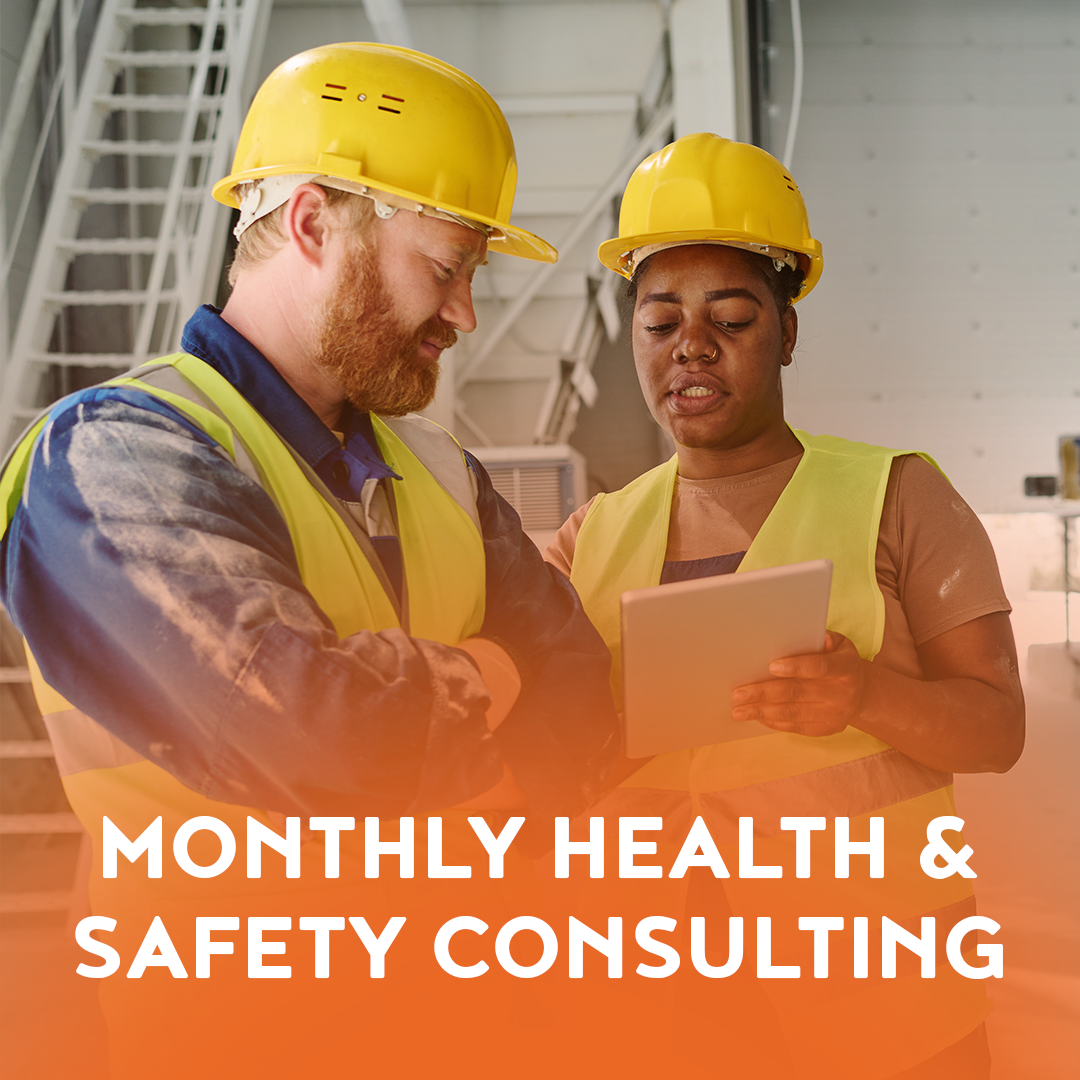
From Audit To Action: Streamlining International Health And Safety With Integrated Software
The graveyard of safety and health-related initiatives is filled with fantastic audit reports. Beautifully bound, meticulously compiled with sharp observations and wise suggestions. They are also completely unusable because no one ever took action on the recommendations. The gap between audit and action has haunted the profession since its inception. Audits yield results; action requires change. The two are entangled in all the ways that make organisations human such as competing priorities, insufficient resources, ambiguous responsibilities and the fact the urgent issues of today are always more urgent than the previous audit recommendations. Integrated software isn't able to magically fix this issue, but it can provide the framework which makes closure feasible. When every finding has an owner and every owner has a deadline, and every deadline has implications that are apparent to executives, the road for action from an audit is not just possible but inevitable. This is what improving the health and safety of international workers is actually about.
1. The Audit Isn't The End, Rather It's the Beginning
The traditional way of thinking is to treat the audit report as a deliverable. The consultant distributes it to the client, who receives it, and the two consider that the engagement is complete. The integrated software challenges this assumption. Audits are not completed until each and every error has been taken care of, every corrective step was verified, and each lesson incorporated into ongoing operations. The software is able to track this entire time, making audits discrete events into continuous improvement cycles. Consultants are involved throughout the implementation phase, providing advice about the procedure and evaluating its their effectiveness instead of disappearing after providing bad news.
2. Every Finding requires an Owner and Software Requires Ownership
Most of the reasons found in audit findings that aren't addressed is in that no one is responsible for dealing with them. They're added to agendas for meetings, discussed on safety committees, passed from manager to manager and finally are subsequently forgotten. The integrated software reduces this dispersion of responsibility, by assigning each information to a certain person and their agreement recorded within the system. They receive notifications, their manager can see their task plan, and their progress--or its absence--is seen by all. Ownership becomes more than the concept, it becomes an operational truth that's enforced by a tool all of us use daily.
3. Deadlines without transparency are only Wishes and not commitments
Many audit reports have targets for corrective action dates But these dates are only on paper. They are inaccessible until someone comes across the report and checks. Integrated software lets deadlines be seen regularly, via dashboards, notification and in escalation workflows. They provide senior management with notifications when deadlines start to approach without completing. This visibility transforms deadlines from aspirational to operational. Managers are aware that the performance of their the safety aspects is being analyzed along with production metrics in the form of quality indicators, performance metrics, and every other aspect that determines their success.
4. Root Cause Analysis Prevents Recycling of the findings
Organizations that aren't addressing issues at the root are audited by the same results each year. Security guards get replaced but the design that underlies it is risky. The process of training is repeated but the cultural causes that trigger unsafe behavior remain unaddressed. The integrated software allows for proper root cause analysis through providing guidelines within the platform. It requires more research before corrective measures are approved, and tracking whether similar findings occur across different websites. If patterns develop--the same type of issue appearing over and over again, the software warns of them to be addressed by the system rather than allowing for incessant local fixes.
5. Verification requires evidence, not Arguments
"How do we know when it's repaired?" The answer to this question should come after each corrective measure, but in practice, it's rarely the case. If someone asserts that the action is completed, you close the application, and then everyone moves on. The integrated software will require evidence: images of completed repairs logs of attendance to training, updated procedure documents, signed off verification checks. These documents are attached to the document, examined by the responsible consultant or internal auditors, and stored as part of the audit trail. Closure requires demonstration, not just declaration.
6. Learning Loops Connect Sites Across Borders
When a company in Brazil addresses a finding about locking out or tagout procedures, that information will be helpful to other facilities like Mexico, India, and Poland. In traditional systems, it is not often the case. Integrated software makes loops of learning, not only the discovery as well as its resolution, but also principal lessons, making them searchable and accessible to other sites with similar dangers. A safety manager in Vietnam could search the system for "confined area incidents" to find more than numbers but detailed reports of what happened, how it happened and the way it was resolved, including details of the person who fixed the problem.
7. Resource Allocation Is Now Data-Driven
Every company has a limited budget for safety improvements. The problem is which actions to prioritize. The integrated software contains the information necessary for rational prioritisation. the risk-to-benefit ratios of different findings, and the cost and complexity of various corrective actions, the frequency patterns indicating systemic issues. Management can not simply see a list of unanswered questions but also a risk-based portfolio of improvement options, which allows them to concentrate their efforts and resources where they will make the most difference rather than simply responding to those who complain the loudest.
8. Consultants shift into Report Writers to Implementation Partners
When consultants know what they have discovered will eventually be tracked through to resolution in an integrated system their relationship with clients is transformed. They cease writing reports to avoid liability and begin developing corrective actions that can be carried out. They remain on hand during implementation responding to questions, altering recommendations based upon practical constraints and checking that completed actions achieve intended outcomes. The consultant becomes a partner to improve rather than a judge outside, building relationships that span several audit cycles.
9. Regulatory and insurance benefits follow Acts of Demonstrated
Insurance and regulatory authorities are beginning to distinguish between those with audit results and those that implement them. When an incident occurs or inspections are required, having complete, documented history of actions proves good faith and efficient management. Integral software records this information instantaneously, providing complete trail records of every find as well as every person who was assigned a particular owner, every completed action, and every verification. The evidence influenced regulatory decisions or insurance rates, as well as legal decisions in ways documents cannot compare to.
10. Culture shifts from finding fault in a way to fix the problem
The most impactful result of closing the audit-to-action gap is one of culture. When employees realize that audit findings lead to tangible changes -- that reporting a hazard will result in the actual happening of the problem, they begin to trust the system. Once managers understand that safety measures are monitored along with the goals for production, they integrate safety into their daily routines instead of treating it as an additional burden. The business shifts from having one of finding fault, identifying weaknesses and pointing fingers at the culprits, to the culture of addressing problems and the objective is for compliance to not be proven, but to continuously enhance. This shift in the culture provides the best return for investment in integrated software, which is only achievable when audits reliably lead to prompt action. Take a look at the top global health and safety for website recommendations including identify hazards, consultation services, safety topics, safety courses, workplace safety training, smart safety, personnel safety, safety consulting services, risk assessment template, safety hazard and more.
